
[ad_1]
For most of the 10 years that I idly thought about thermostats, I had no intention of building one. It was the early 2000s, and I was at Apple making the first iPhone. I got married, had kids. I was busy.
But then again, I was also really cold. Bone-chillingly cold.
Every time my wife and I drove up to our Lake Tahoe ski cabin on Friday nights after work, we’d have to keep our snow jackets on until the next day. The house took all night to heat up.
Walking into that frigid house drove me nuts. It was mind-boggling that there wasn’t a way to warm it up before we got there. I spent dozens of hours and thousands of dollars trying to hack security and computer equipment tied to an analog phone so I could fire up the thermostat remotely. Half my vacations were spent elbow-deep in wiring, electronics littering the floor. But nothing worked. So the first night of every trip was always the same: We’d huddle on the ice block of a bed, under the freezing sheets, watching our breath turn into fog until the house finally warmed up by morning.
Then on Monday I’d go back to Apple and work on the first iPhone. Eventually I realized I was making a perfect remote control for a thermostat. If I could just connect the HVAC system to my iPhone, I could control it from anywhere. But the technology that I needed to make it happen—reliable low-cost communications, cheap screens and processors—didn’t exist yet.
How did these ugly, piece-of-crap thermostats cost almost as much as Apple’s most cutting-edge technology?
A year later we decided to build a new, superefficient house in Tahoe. During the day I’d work on the iPhone, then I’d come home and pore over specs for our house, choosing finishes and materials and solar panels and, eventually, tackling the HVAC system. And once again, the thermostat came to haunt me. All the top-of-the-line thermostats were hideous beige boxes with bizarrely confusing user interfaces. None of them saved energy. None could be controlled remotely. And they cost around US $400. The iPhone, meanwhile, was selling for $499.
How did these ugly, piece-of-crap thermostats cost almost as much as Apple’s most cutting-edge technology?
The architects and engineers on the Tahoe project heard me complaining over and over about how insane it was. I told them, “One day, I’m going to fix this—mark my words!” They all rolled their eyes—there goes Tony complaining again!
At first they were just idle words born of frustration. But then things started to change. The success of the iPhone drove down costs for the sophisticated components I couldn’t get my hands on earlier. Suddenly high-quality connectors and screens and processors were being manufactured by the millions, cheaply, and could be repurposed for other technology.
My life was changing, too. I quit Apple and began traveling the world with my family. A startup was not the plan. The plan was a break. A long one.
We traveled all over the globe and worked hard not to think about work. But no matter where we went, we could not escape one thing: the goddamn thermostat. The infuriating, inaccurate, energy-hogging, thoughtlessly stupid, impossible-to-program, always-too-hot-or-too-cold-in-some-part-of-the-house thermostat.
Someone needed to fix it. And eventually I realized that someone was going to be me.
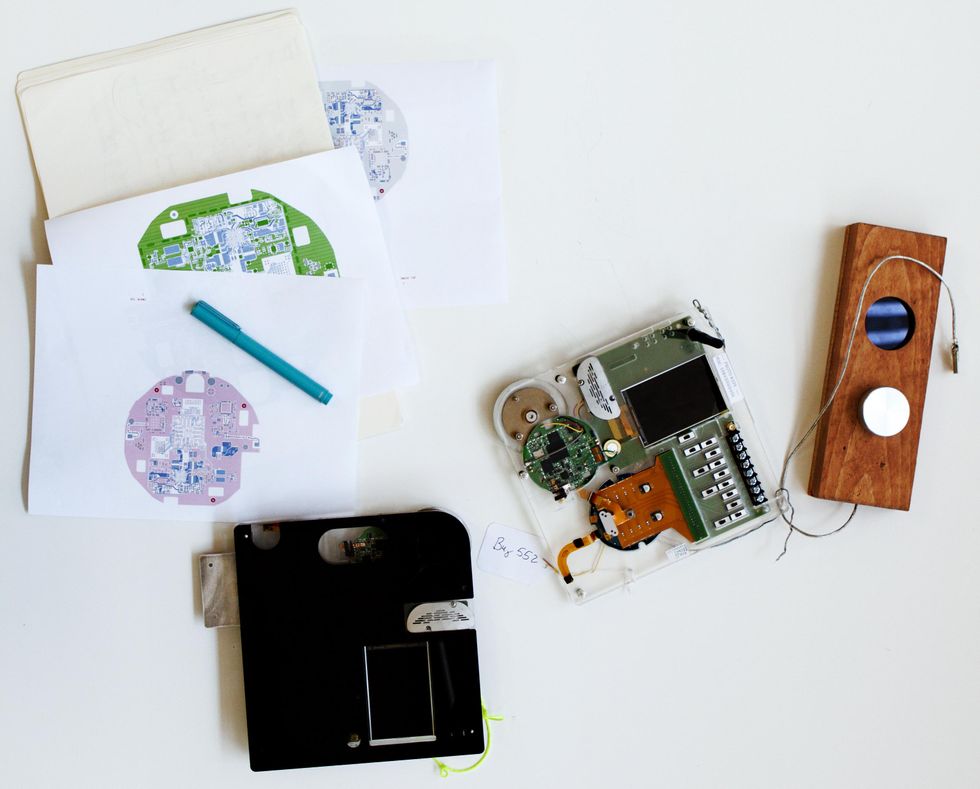
This 2010 prototype of the Nest thermostat wasn’t pretty. But making the thermometer beautiful would be the easy part. The circuit board diagrams point to the next step—making it round.Tom Crabtree
The big companies weren’t going to do it. Honeywell and the other white-box competitors hadn’t truly innovated in 30 years. It was a dead, unloved market with less than $1 billion in total annual sales in the United States.
The only thing missing was the will to take the plunge. I wasn’t ready to carry another startup on my back. Not then. Not alone.
Then, magically, Matt Rogers, who’d been one of the first interns on the iPod project, reached out to me. He was a real partner who could share the load. So I let the idea catch me. I came back to Silicon Valley and got to work. I researched the technology, then the opportunity, the business, the competition, the people, the financing, the history.
Making it beautiful wasn’t going to be hard. Gorgeous hardware, an intuitive interface—that we could do. We’d honed those skills at Apple. But to make this product successful—and meaningful—we needed to solve two big problems:
It needed to save energy.
And we needed to sell it.
In North America and Europe, thermostats control half a home’s energy bill—something like $2,500 a year. Every previous attempt to reduce that number—by thermostat manufacturers, by energy companies, by government bodies—had failed miserably for a host of different reasons. We had to do it for real, while keeping it dead simple for customers.
Then we needed to sell it. Almost all thermostats at that point were sold and installed by professional HVAC technicians. We were never going to break into that old boys’ club. We had to find a way into people’s minds first, then their homes. And we had to make our thermostat so easy to install that literally anyone could do it themselves.
It took around 9 to 12 months of making prototypes and interactive models, building bits of software, talking to users and experts, and testing it with friends before Matt and I decided to pitch investors.
“Real People” Test the Nest
Once we had prototypes of the thermostat, we sent it out to real people to test.
It was fatter than we wanted. The screen wasn’t quite what I imagined. Kind of like the first iPod, actually. But it worked. It connected to your phone. It learned what temperatures you liked. It turned itself down when nobody was home. It saved energy. We knew self-installation was potentially a huge stumbling block, so everyone waited with bated breath to see how it went. Did people shock themselves? Start a fire? Abandon the project halfway through because it was too complicated? Soon our testers reported in: Installation went fine. People loved it. But it took about an hour to install. Crap. An hour was way too long. This needed to be an easy DIY project, a quick upgrade.
So we dug into the reports—what was taking so long? What were we missing?
Our testers…spent the first 30 minutes looking for tools.
Turns out we weren’t missing anything—but our testers were. They spent the first 30 minutes looking for tools—the wire stripper, the flathead screwdriver; no, wait, we need a Phillips. Where did I put that?
Once they gathered everything they needed, the rest of the installation flew by. Twenty, 30 minutes tops.
I suspect most companies would have sighed with relief. The actual installation took 20 minutes, so that’s what they’d tell customers. Great. Problem solved.
But this was going to be the first moment people interacted with our device. Their first experience of Nest. They were buying a $249 thermostat—they were expecting a different kind of experience. And we needed to exceed their expectations. Every minute from opening the box to reading the instructions to getting it on their wall to turning on the heat for the first time had to be incredibly smooth. A buttery, warm, joyful experience.
And we knew Beth. Beth was one of two potential customers we defined. The other customer was into technology, loved his iPhone, was always looking for cool new gadgets. Beth was the decider—she dictated what made it into the house and what got returned. She loved beautiful things, too, but was skeptical of supernew, untested technology. Searching for a screwdriver in the kitchen drawer and then the toolbox in the garage would not make her feel warm and buttery. She would be rolling her eyes. She would be frustrated and annoyed.
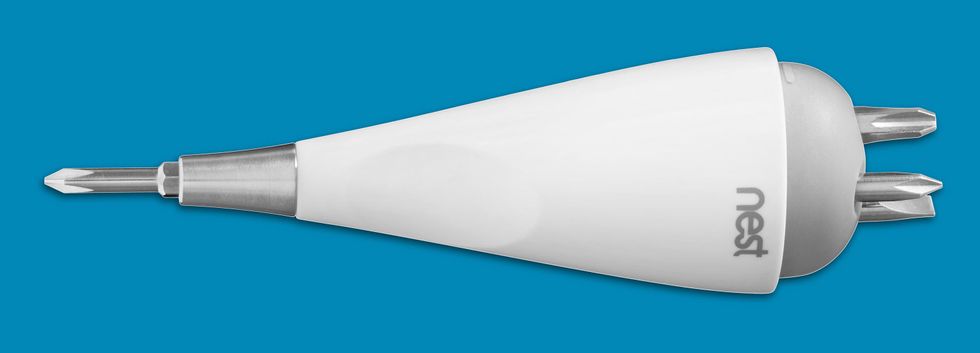
Shipping the Nest thermostat with a screwdriver “turned a moment of frustration into a moment of delight”Dwight Eschliman
So we changed the prototype. Not the thermostat prototype—the installation prototype. We added one new element: a little screwdriver. It had four different head options, and it fit in the palm of your hand. It was sleek and cute. Most importantly, it was unbelievably handy.
So now, instead of rummaging through toolboxes and cupboards, trying to find the right tool to pry their old thermostat off the wall, customers simply reached into the Nest box and took out exactly what they needed. It turned a moment of frustration into a moment of delight.
Honeywell Laughs
Sony laughed at the iPod. Nokia laughed at the iPhone. Honeywell laughed at the Nest Learning Thermostat.
At first.
In the stages of grief, this is what we call Denial.
But soon, as your disruptive product, process, or business model begins to gain steam with customers, your competitors will start to get worried. And when they realize you might steal their market share, they’ll get pissed. Really pissed. When people hit the Anger stage of grief, they lash out, they undercut your pricing, try to embarrass you with advertising, use negative press to undermine you, put in new agreements with sales channels to lock you out of the market.
And they might sue you.
The good news is that a lawsuit means you’ve officially arrived. We had a party the day Honeywell sued Nest. We were thrilled. That ridiculous lawsuit meant we were a real threat and they knew it. So we brought out the champagne. That’s right, f—ers. We’re coming for your lunch.
Nest Gets Googled
With every generation, the product became sleeker, slimmer, and less expensive to build. In 2014, Google bought Nest for $3.2 billion. In 2016 Google decided to sell Nest, so I left the company. Months after I left, Google changed its mind. Today, Google Nest is alive and well, and they’re still making new products, creating new experiences, delivering on their version of our vision. I deeply, genuinely, wish them well.
From Your Site Articles
Related Articles Around the Web
[ad_2]
Source link
About the Author


